Modal verbs can be tricky, but must and have to are especially confusing because they often seem interchangeable. You might hear a native speaker say "I must call my mother" and "I have to call my mother" in the same conversation. So what's the real difference?
The answer lies in where the obligation comes from. Must usually comes from inside you — your own feelings, beliefs, or personal importance. Have to comes from outside — rules, laws, other people, or situations you can't control. Understanding this distinction will help you express yourself more naturally and avoid the most common trap: confusing mustn't with don't have to.
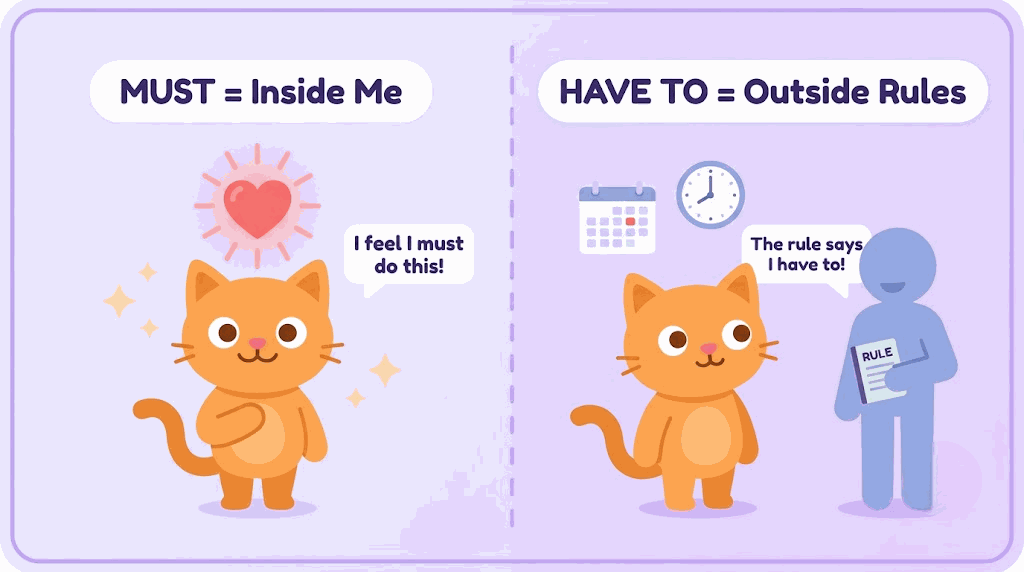
Internal vs. External: The source of obligation changes everything.
1. Must: The Voice Inside
Must expresses a strong personal feeling. You use it when you believe something is necessary, important, or morally required. It's the language of conviction, urgency, and personal standards.
When the pressure comes from within:
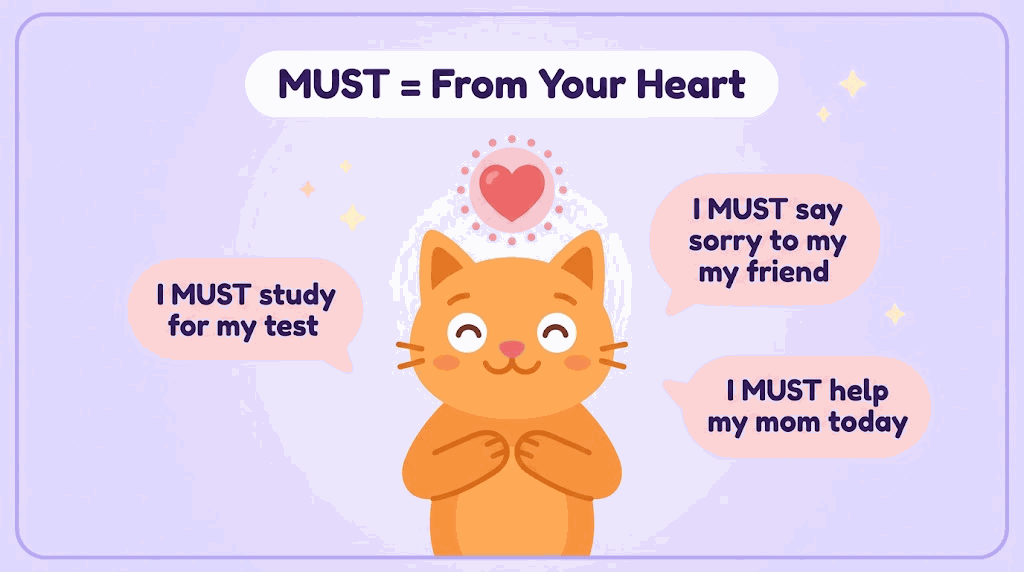
Internal: I believe this.
Think of must as the voice of your conscience or passion. When you say "I must," you are saying that you personally feel the weight of the action.
What About Signs and Rules?
You'll see must on official signs ("Passengers must fasten seatbelts") and have to in everyday speech about rules ("You have to wear a helmet"). The key difference is perspective: must on a sign is the rule itself speaking directly; have to is you describing a rule in conversation. Both are external — but the sign uses must because it sounds more authoritative.
2. Have To: The Rules of the World
Have to describes obligations that come from outside yourself. These are rules, laws, schedules, other people's expectations, or situations you cannot control. You might not personally agree with the obligation, but you still need to follow it.
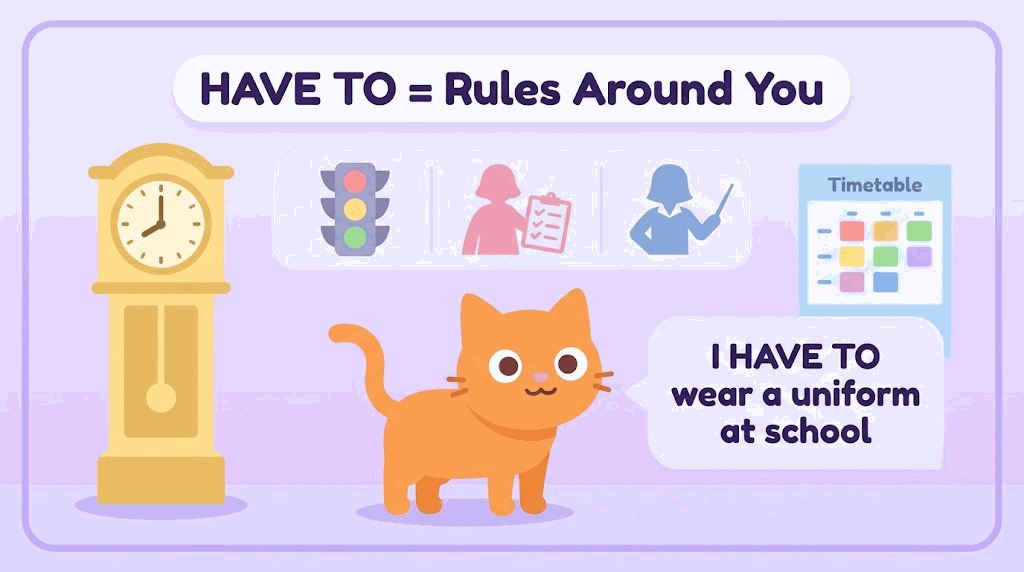
External: The world requires this.
When the pressure comes from outside:
-
1
Laws & rules: Things required by authority.
"You have to wear a helmet when riding a motorcycle."
-
2
Schedule & routine: Fixed by time or plans.
"I have to be at work by 9 AM every day."
-
3
Other people's requests: When someone expects something.
"My boss says I have to finish this report today."
Quick Test
If you can replace "must" with "it's important to me personally," it's a true must. If you can replace it with "the situation demands this," it's a have to.
3. Questions
Both must and have to can form questions, but they work differently. "Must" is more formal and less common in everyday speech, while "Do I have to?" is the natural choice for most situations.
Must in Questions (Formal)
- "Must I attend the meeting?"
- "Must we finish this today?"
Sounds formal or even a little dramatic.
Have To in Questions (Natural)
- "Do I have to attend the meeting?"
- "Does she have to work on Saturday?"
Standard in everyday conversation.
Pro Tip: Answering "Must I?" Questions
If someone asks "Must I...?" and the answer is "no," be careful!
"No, you mustn't" = It's forbidden (Don't do it!).
"No, you don't have to" = It's not necessary (You have a choice).
4. Negatives: The Most Important Difference
This is where learners make the most mistakes. Mustn't and don't have to have completely opposite meanings. Getting these wrong can completely change what you are trying to say.
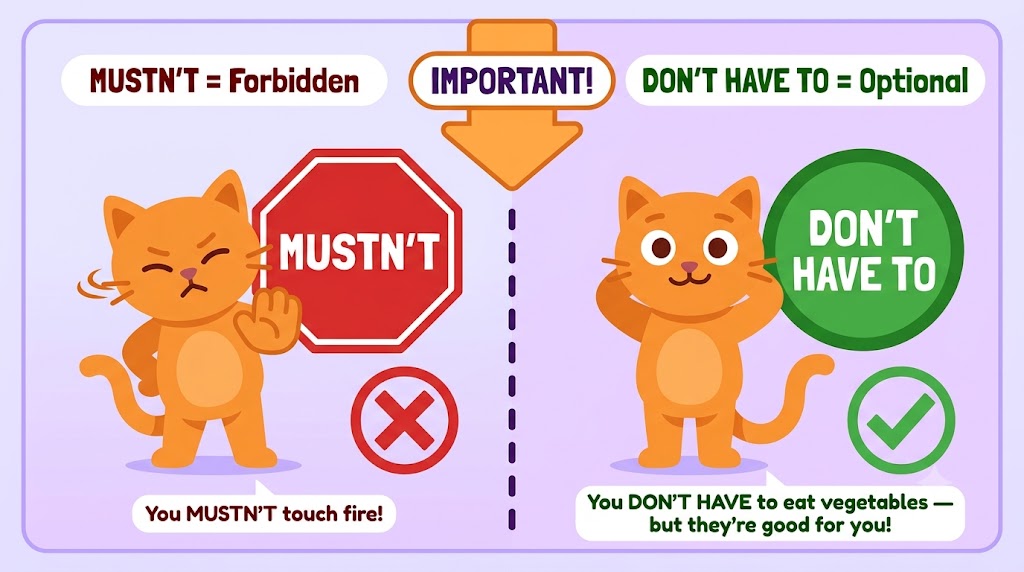
Mustn't = Prohibition (NO!) vs. Don't Have To = Optional (Your choice).
Mustn't = Prohibition
It is forbidden. You are NOT allowed to do this. This is a strong negative rule.
-
🚫
"You mustn't touch that — it's very hot."
-
🚫
"Students mustn't use phones during the exam."
-
🚫
"We mustn't forget to lock the door."
Don't Have To = No Obligation
It is not necessary. You can do it, but you don't need to. There is no rule.
-
✅
"You don't have to come early — the doors open at 8."
-
✅
"She doesn't have to wear a uniform at work."
-
✅
"We don't have to cook tonight. Let's order pizza."
Why This Matters
WRONG:
"You don't have to park here — it's a fire lane."
(This says it's optional, but it's actually forbidden!)
RIGHT:
"You mustn't park here — it's a fire lane."
(Clear prohibition. Correct.)
Memory trick: Mustn't = "You must not do it" (forbidden).
Don't have to = "You don't need to do it" (optional).
5. Past Tense: Had To
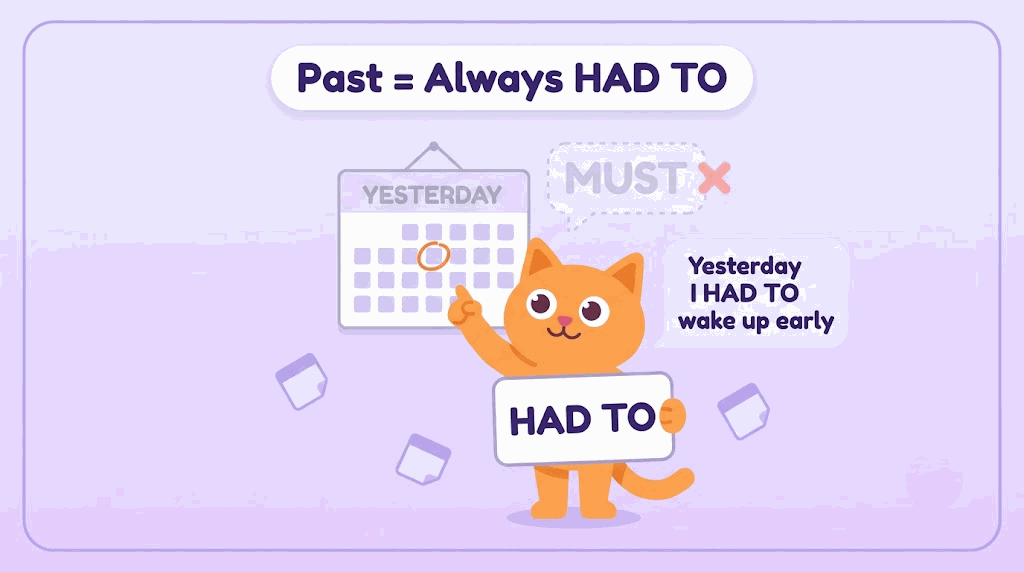
Must has no past form. When you need to talk about an obligation in the past, you must use had to for both must and have to. This is a common area where learners make mistakes by trying to use "must" for past situations.
| Tense |
Must |
Have To |
| Present |
I must go. |
I have to go. |
| Past |
I had to go. ✱ |
I had to go. |
| Negative Past |
— (Not used) |
I didn't have to go. |
✱ Must has no past form. Always use "had to" for past obligations.
Examples in past tense:
-
•
"I had to wake up at 5 AM yesterday."
-
•
"She had to take the train because her car broke down."
-
•
"We didn't have to pay — it was free entry."
Past: Always "Had To"
Heads Up: "Must" Also Means "I'm Sure"
You'll often hear must used for deduction — when you're almost certain about something. For example: "You must be tired after that long flight" (I'm sure you are tired) or "It must be raining — I can hear the drops." This is NOT about obligation; it's about making a logical guess. Just be aware of this second meaning so you don't confuse it with the obligation rules you learned here.
6. Common Mistakes to Avoid
These are the most frequent errors learners make with must and have to. Recognizing them will help you speak and write more accurately.
1. Using "Must" for Past Events
❌ "I must go to the doctor yesterday."
✅ "I had to go to the doctor yesterday."
Remember: must has no past form. Always use had to.
2. Confusing "Mustn't" with "Don't Have To"
❌ "You don't have to smoke here. It's prohibited."
✅ "You mustn't smoke here. It's prohibited."
✅ "You don't have to smoke if you don't want to." (This means it's optional!)
3. Wrong Verb Form After "To"
❌ "She has to goes to school."
✅ "She has to go to school."
After "have to" or "has to," always use the base form of the verb.
Check Your Understanding
Choose the correct option for each sentence:
-
1
You ___ wear a seatbelt — it's the law.
-
2
I ___ remember to call my grandmother. It's her birthday.
-
3
You ___ touch that — it's dangerous!
-
4
You ___ come if you don't want to. It's optional.
-
5
Yesterday, I ___ work late to finish the project.
Answers:
1. have to (external law) / 2. must (personal importance) / 3. mustn't (prohibition) / 4. don't have to (optional) / 5. had to (past obligation)
Conclusion
Mastering must and have to is about recognizing the source of your obligation. Is the pressure coming from inside you — your values, urgency, or personal belief? Use must. Is it coming from outside — rules, schedules, or other people? Use have to.
The most important lesson from this guide is the difference between mustn't (prohibition — don't do it) and don't have to (no obligation — you have a choice). Getting this right will prevent some of the most common and confusing errors in English. And remember: when talking about the past, always use had to.
Next time you feel the weight of an obligation, pause and ask yourself: "Is this coming from my heart, or from the world around me?" That answer will guide you to the right word every time.
