School Shooting Opening Scene | S.W.A.T.
What school application is one student worried she will not get into?
Roughly how many college applications does she say she has already done?
What is happening when the SWAT team first appears in the scene?
What leadership lesson does Hondo emphasize during the drill?
What personal news is shared right before the emergency call?
What real emergency interrupts the training?
How quickly are secondary units expected to arrive at the school?
Movie Recap
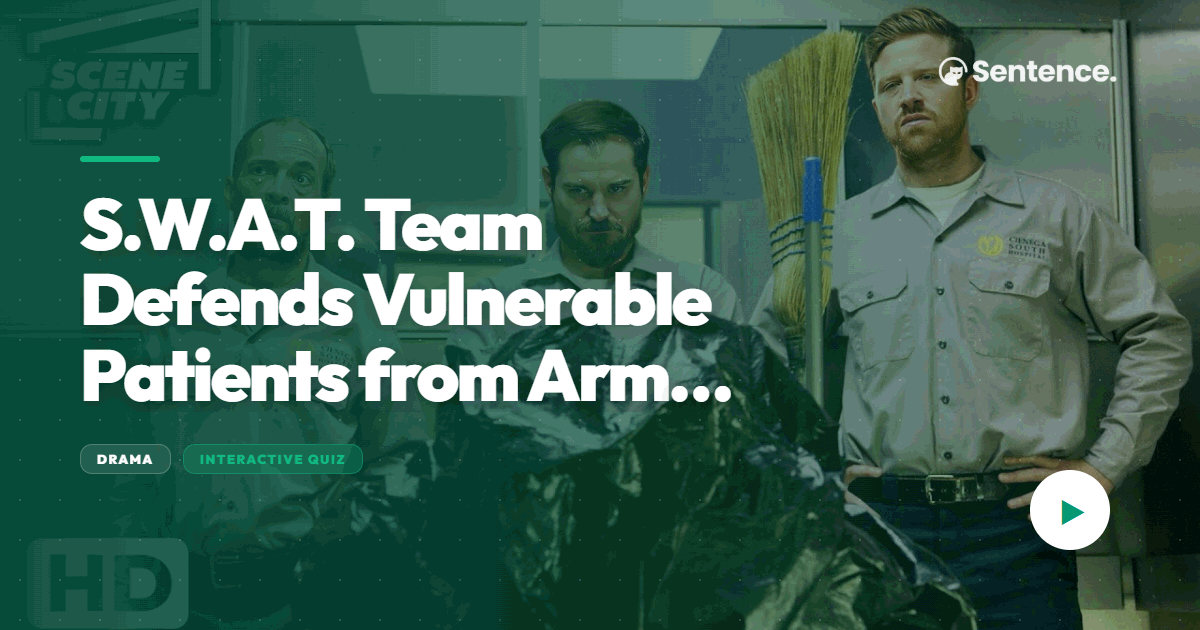
In this S.W.A.T. clip, the scene starts like a normal day with teenagers talking about school, college, and small personal stuff. Then everything flips when SWAT gets an active shooter call and the team has to move from training mode into real danger almost instantly.
That sudden change is what makes the scene hit so hard. It reminds you how fast an ordinary day can turn into a crisis, and it puts the team in a situation where they cannot wait for perfect conditions before going in.
What We Can Learn
This scene is a powerful study in the "language of sudden transition." It starts with everyday, casual teenage talk—full of slang and worries about college—before a single radio call flips the world upside down. This contrast teaches us how English speakers change their entire communication style when they move from "normal life" to a "crisis state."
Notice the "Slang and Banter" in the first half of the scene. The girls use playful phrases like "silver fox" (referring to an attractive older man) and talk about "crushing" on people. In English, this kind of informal talk is full of humor and exaggeration. It creates a "safe" feeling that makes the coming crisis feel even more shocking. Listen for the shift from playful teasing to the absolute serious call to action:
"Scenario over. Multiple reports of an active shooter at River Hill High... You are sheep dogs. In front of the wolf, protect the flock."
Pay close attention to the "Tactical Jargon" used once the crisis begins: "Patching through live 9-1-1 call" and "confirm any additional units." These are formal, abbreviated structures used by emergency services to share info as fast as humanly possible. They remove "filler" words to focus only on the facts. This is "efficient English" at its highest, most professional level.
The vocabulary in this scene also covers the gap between school-aged social lives and high-risk police training:
| Term | Context | Why it matters |
|---|---|---|
| Silver fox | Attractive older man | A common slang term used in playful or teasing social conversations. |
| Active shooter | Gunman on scene | A technical term that immediately signals a high-priority, life-threatening emergency. |
| First on scene | Arrival at the location | Used to define the massive responsibility of the first people to help in a crisis. |
Lastly, look at the metaphor used by the team leader: "You are sheep dogs... protect the flock." This is a classic example of using "Analogies" to define a professional role. It teaches the team (and the learner) that their job is about responsibility and protection. Learning how to use a simple image (like a dog and a flock) to explain a complex duty is a hallmark of good leadership communication in English.




Login to track your progress!
Login Now
No comments yet. Be the first to share your thoughts!