Miguel Cannot Feel His Feet | Cobra Kai
Who are Daniel and Johnny searching for in the first half of the scene?
What location is mentioned as a place Robby knows how to survive around?
What finally makes the men start cooperating?
What is the doctor mainly checking during Miguel's examination?
How does Miguel respond when asked if he can feel certain touches?
What future activity does Miguel ask about directly?
What cautious answer does the doctor give Miguel?
Movie Recap
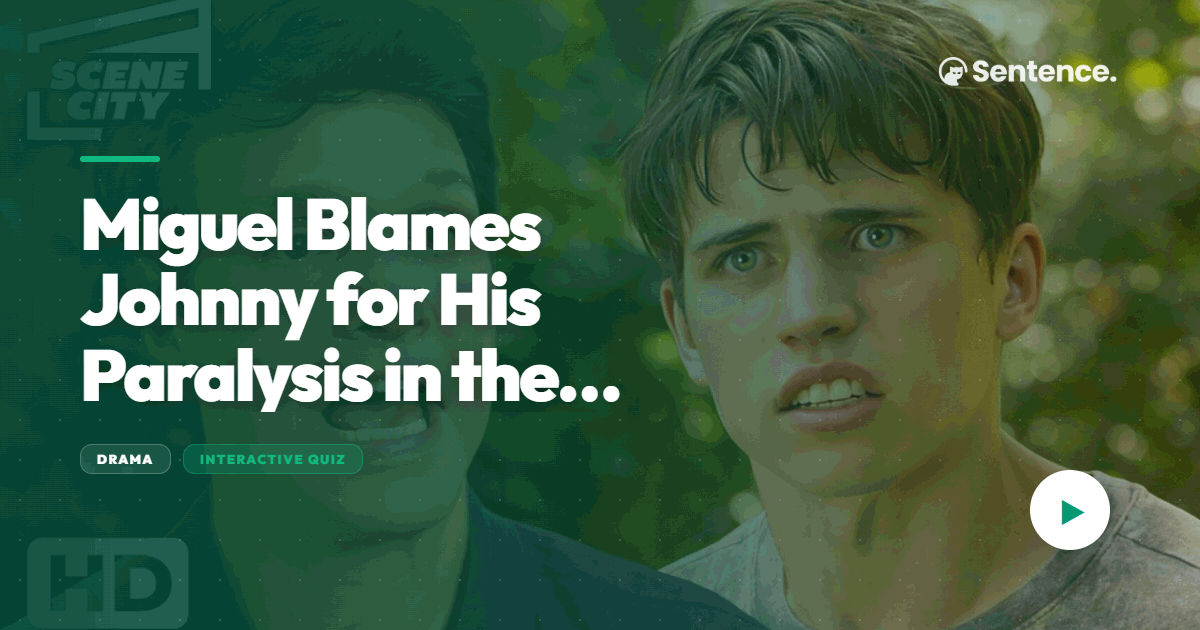
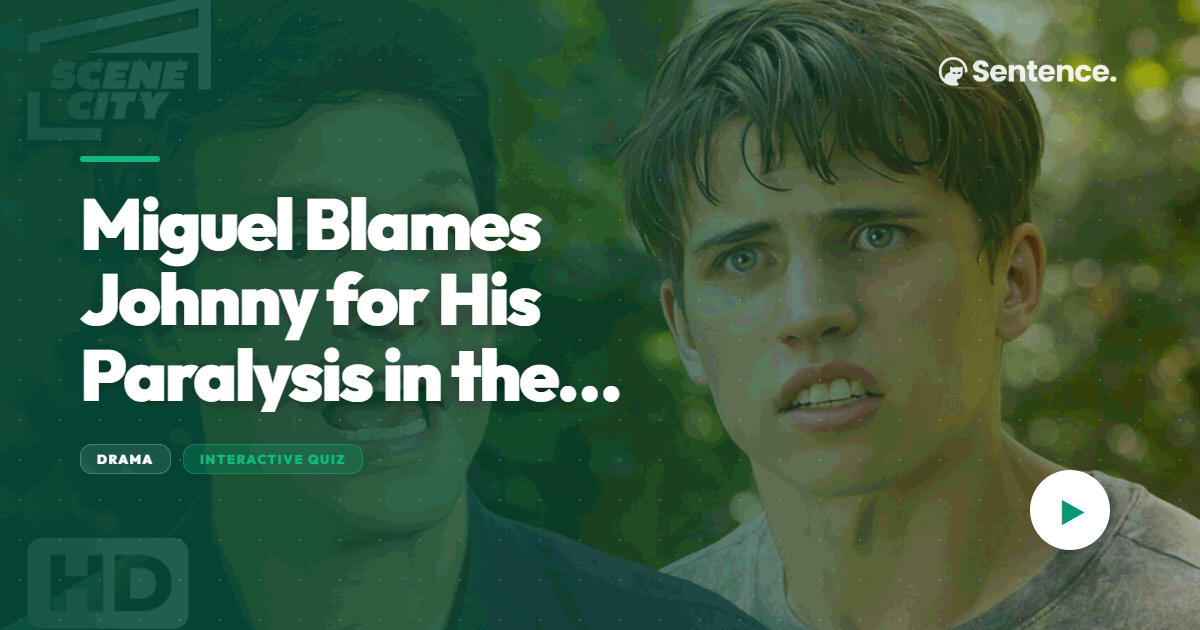
In this Cobra Kai scene, Daniel and Johnny are out chasing leads about Robby while Miguel is back in the hospital being examined. The two parts of the clip work together really well, because one side is about frantic searching and the other side is about a painful truth Miguel can no longer avoid.
The emotional center of the scene is Miguel realizing he still cannot feel his feet. That is what makes the clip hit so hard, because even with people trying to stay hopeful around him, he is forced to face how serious his situation really is.
What We Can Learn
This scene is a strong lesson in crisis communication because the language is short, direct, and emotionally clear. Miguel does not use long sentences; he repeats one urgent message: "I can't feel my feet." That gives learners a realistic model for speaking when they are in pain, panic, or shock. In real life, clarity matters more than complexity, so this scene teaches how simple grammar can carry serious meaning.
From that line, the first grammar pattern is practical and reusable: Subject + can't + base verb. You can apply it immediately in medical or emergency contexts: "I can't move my arm," "I can't stand," "I can't breathe well." The second grammar point is contrast between formal and spoken forms. Textbooks often show cannot, but natural speech in stressful moments usually uses can't. When you understand both forms, you can speak more naturally and catch fast dialogue in movies and daily conversation.
"I can't feel my feet... Sensei, I can't feel my feet. We're gonna get you back, OK? They got a guy coming in... he works miracles."
The quote also connects to spoken grammar reduction. Gonna is the reduced spoken form of going to, and it appears when speakers react quickly under pressure. The line "They got a guy coming in" is another common informal structure, where got functions like have in casual American English. These are not random slang fragments; they are high-frequency patterns learners must recognize to follow authentic conversation speed.
| Term | What it means | How to use it |
|---|---|---|
| Miracle Worker | A person with exceptional skill | Used to praise a doctor or expert who can solve very hard problems. |
| Physical Therapy | Guided recovery training after injury | Used when talking about rebuilding strength and movement. |
| Straight up | Honestly and directly | Useful for emphasizing truth in tense conversations. |
Because the scene moves from fear to reassurance, it also teaches listening for tone shifts. Miguel's repeated sentence signals panic, while Johnny's faster optimistic lines signal support and control. A practical way to practice this scene is to repeat Miguel's line with different body-part nouns, then rewrite Johnny's response from "gonna" to "going to" and from "got" to "have." That contrast trains both natural listening and accurate grammar control.



Login to track your progress!
Login Now

No comments yet. Be the first to share your thoughts!